
The Greatest Rivalries in Formula 1 History
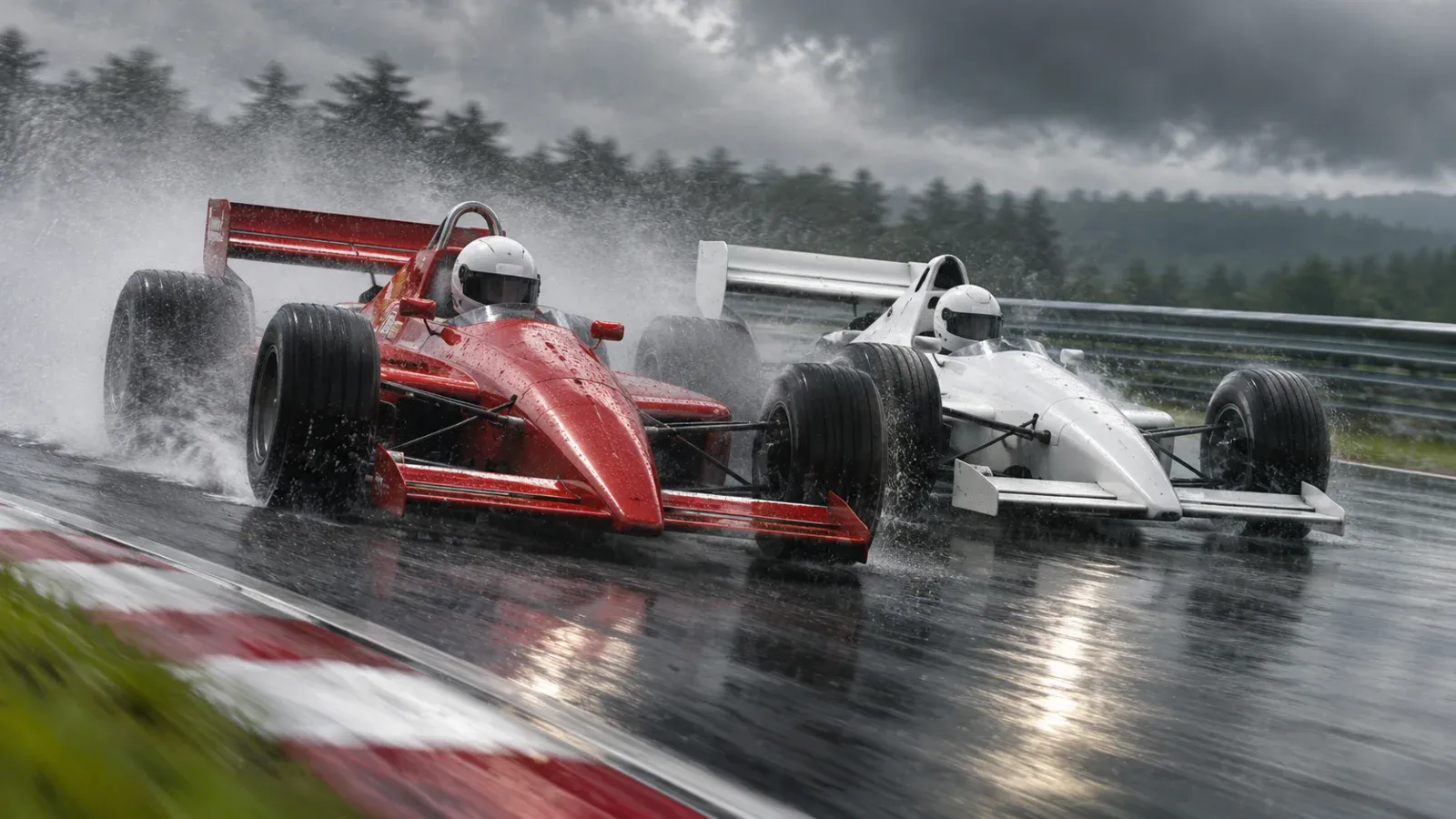
Formula 1 is a team sport, but its greatest stories are often about two drivers. Rivalries between teammates and title contenders have produced the sport's most dramatic moments, from collisions that decided championships to friendships that turned into feuds. These are the greatest rivalries in Formula 1 history.
James Hunt vs Niki Lauda (1976)
Lauda led the 1976 championship comfortably until a fiery crash at the Nürburgring left him badly burned. He returned only six weeks later. The title went down to the last race in Japan, run in torrential rain. Lauda withdrew, judging the conditions too dangerous, and Hunt won the championship by a single point. Off track, the two were friends.
Gilles Villeneuve vs Didier Pironi (1982)
The Ferrari teammates fell out at the 1982 San Marino Grand Prix, when Pironi passed Villeneuve on the last lap against what Villeneuve believed was a team order to hold position. Villeneuve was killed in qualifying for the next race in Belgium, and the rivalry became one of the sport's saddest stories.
Alain Prost vs Ayrton Senna (1988–1993)
As McLaren teammates in 1988 and 1989, Prost and Senna won almost every race. Their relationship broke down completely. In 1989 they collided at Suzuka and Prost took the title. A year later, with Prost at Ferrari, they collided at the first corner of the same circuit and the championship went to Senna. Read more about both drivers on our page about Formula 1 legends.
Michael Schumacher vs Damon Hill (1994–1996)
The 1994 title was decided in Adelaide, when Schumacher and Hill collided while fighting for the lead. Both retired and Schumacher became champion by one point. Hill won the title two years later.
Michael Schumacher vs Jacques Villeneuve (1997)
At the final race at Jerez, Schumacher turned into Villeneuve while defending the lead. Villeneuve continued and won the championship. Schumacher was later excluded from the 1997 championship standings.
Lewis Hamilton vs Nico Rosberg (2014–2016)
Childhood friends became fierce rivals as Mercedes teammates in the hybrid era. Hamilton won the titles in 2014 and 2015, Rosberg in 2016, after which Rosberg announced his retirement just days later.
Lewis Hamilton vs Max Verstappen (2021)
One of the most intense seasons ever. The two contenders collided at Silverstone and Monza and arrived at the final race in Abu Dhabi level on points. After a late safety car and a controversial restart, Verstappen passed Hamilton on the final lap to win his first title.
Why rivalries matter
Rivalries show the human side of a highly technical sport. They push drivers to their limits, divide fans and often lead to rule changes, from how teams manage their drivers to how race control handles safety cars. Discover more context in our history of Formula 1 and our guide to historic Formula 1 circuits.
Team-mate rivalries
Some of the most intense rivalries in Formula 1 history took place inside the same team. Team-mates have identical equipment, so every difference in result points directly at the drivers. When two strong drivers share a garage, tension often builds over strategy, team orders and who gets priority. Teams have to manage these situations carefully, because an internal war can cost both championships.
Rivalries off the track
Rivalries are not only fought on the circuit. Interviews, press conferences and political battles within teams and with the governing body all add to the drama. Some rivals respected each other deeply despite their differences, while others carried their dispute well beyond their racing careers. In several cases, former rivals later became friends and spoke warmly of each other.
What rivalries did for the sport
Great rivalries attract attention far beyond the core fan base. They give casual viewers a reason to follow the championship and create storylines that are retold for decades. Many of the most watched seasons in history were defined by a close duel between two drivers. The drivers behind these duels are profiled in Formula 1 legends.
Rivalries between teams
Behind many driver rivalries lies a rivalry between teams. Constructors with different philosophies, engine partners and national identities have competed for decades, sometimes for both titles at once. Those team battles shaped technical development and helped produce some of the fastest and most innovative cars in history. Their stories are told in legendary Formula 1 teams.
How rivalries are decided
Close championship fights are often decided by small margins: a single retirement, a penalty, a strategy call or the points system itself. Changes to the scoring rules over the years have sometimes altered the outcome of title battles. The background to those changes is explained in the history of the Formula 1 points system.
Rivalries remain one of the main reasons people fall in love with Formula 1. Every generation produces new duels, and every duel adds another chapter to the sport's long history.
The next great rivalry may already be forming on the grid today.
Watch closely.
Frequently asked questions
What is the most famous rivalry in Formula 1?
Most fans point to Alain Prost and Ayrton Senna, whose battles at McLaren and beyond decided several championships.
Who won the 1976 Formula 1 championship?
James Hunt, by one point over Niki Lauda, after Lauda withdrew from the rain-soaked final race in Japan.
How was the 2021 championship decided?
On the final lap of the Abu Dhabi Grand Prix, when Max Verstappen passed Lewis Hamilton after a late safety car restart.