
How Formula 1 Technology and Safety Evolved
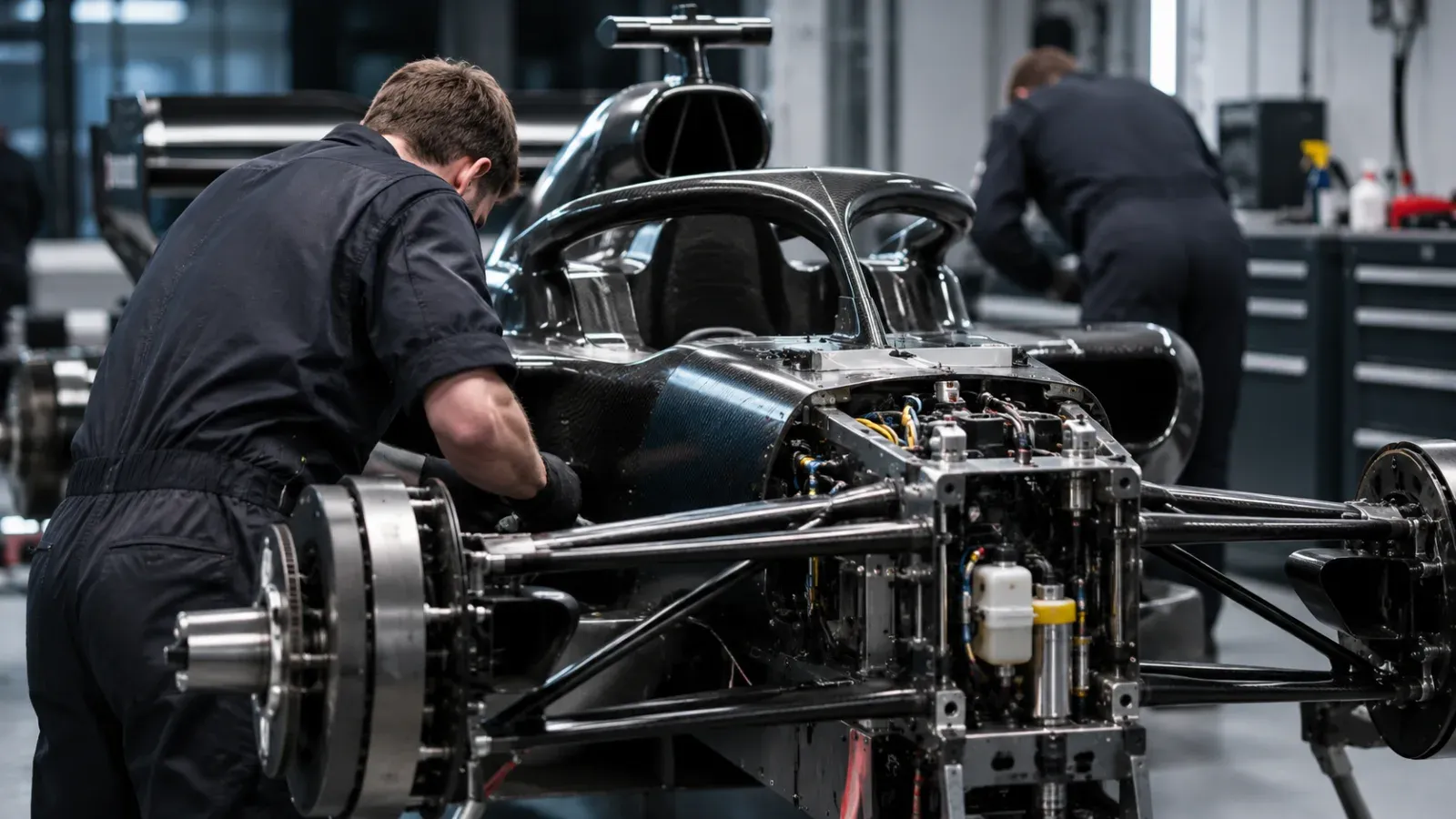
Formula 1 has always been a laboratory on wheels. Engineers look for every advantage, while the sport has gradually learned how to protect its drivers. This page explains the most important technical and safety milestones in Formula 1 history and how they changed the cars we see today.
Engine position and chassis
In the 1950s, Grand Prix cars carried their engines in front of the driver. Cooper's rear-engined cars proved faster and more agile, and by the early 1960s every team had switched. In 1962, Lotus introduced the monocoque, a single stiff tub instead of a tubular frame. In 1981, McLaren built the first carbon fibre chassis, which is both lighter and far stronger in a crash. Carbon fibre has been the standard ever since.
Aerodynamics
Wings appeared in 1968 and quickly became the most important performance factor. Downforce pushes the car onto the track so it can corner faster. In the late 1970s, Lotus used shaped underfloors to create ground effect. After safety concerns, flat floors became mandatory in the 1980s. Ground-effect floors returned in 2022, designed to reduce turbulent air and make it easier for cars to follow each other.
Engines and power units
- 1950s to 1970s: naturally aspirated engines, including the Cosworth DFV V8 that powered many teams.
- 1977 to 1988: turbocharged engines, introduced by Renault and producing enormous power.
- 1989 to 2013: naturally aspirated V10, V12 and later V8 engines.
- 2014 onwards: 1.6-litre turbo V6 hybrid power units with energy recovery from braking and exhaust heat.
- 2026: a new generation with a much larger electric share and fully sustainable fuel.
Gearboxes, electronics and driver aids
Ferrari introduced the semi-automatic paddle-shift gearbox in 1989. In the early 1990s, active suspension and traction control made cars extremely sophisticated, until many driver aids were banned. Since then, Formula 1 has regularly adjusted what electronics are allowed. DRS, a moveable rear-wing flap to help overtaking, was introduced in 2011.
The safety revolution
For decades, fatal accidents were common. Drivers such as Jackie Stewart campaigned for better circuits, medical care and barriers. The deaths of Roland Ratzenberger and Ayrton Senna at Imola in 1994 triggered a major safety drive. Key improvements include:
- Crash-tested chassis and stronger survival cells
- Higher cockpit sides and energy-absorbing headrests
- The HANS device to protect the neck, mandatory since 2003
- Wheel tethers to stop wheels flying off in a crash
- Large run-off areas and modern barriers at circuits
- The halo, mandatory since 2018, which protects the driver's head
The halo has since been credited with protecting drivers in several serious accidents. Read about the drivers behind the sport's safety campaign on our page about Formula 1 legends.
Why technology still matters
Formula 1 teams build their own cars, so technical choices still decide championships. Regulation changes often reshuffle the order, as you can see in our history of Formula 1. They also influence where the sport races, as many historic circuits could not keep up with modern safety standards.
Frequently asked questions
When did Formula 1 introduce the halo?
The halo became mandatory in Formula 1 in 2018.
What is a hybrid power unit?
Since 2014, Formula 1 cars combine a 1.6-litre turbocharged V6 engine with electric motors that recover energy from braking and exhaust heat.
Why did Formula 1 cars switch to carbon fibre?
Carbon fibre is lighter and much stronger than aluminium, which improves both performance and driver safety. McLaren introduced the first carbon fibre chassis in 1981.
Back to home