
Legendary Formula 1 Teams: The Histories of Ferrari, McLaren, Williams, Lotus, Red Bull and Mercedes
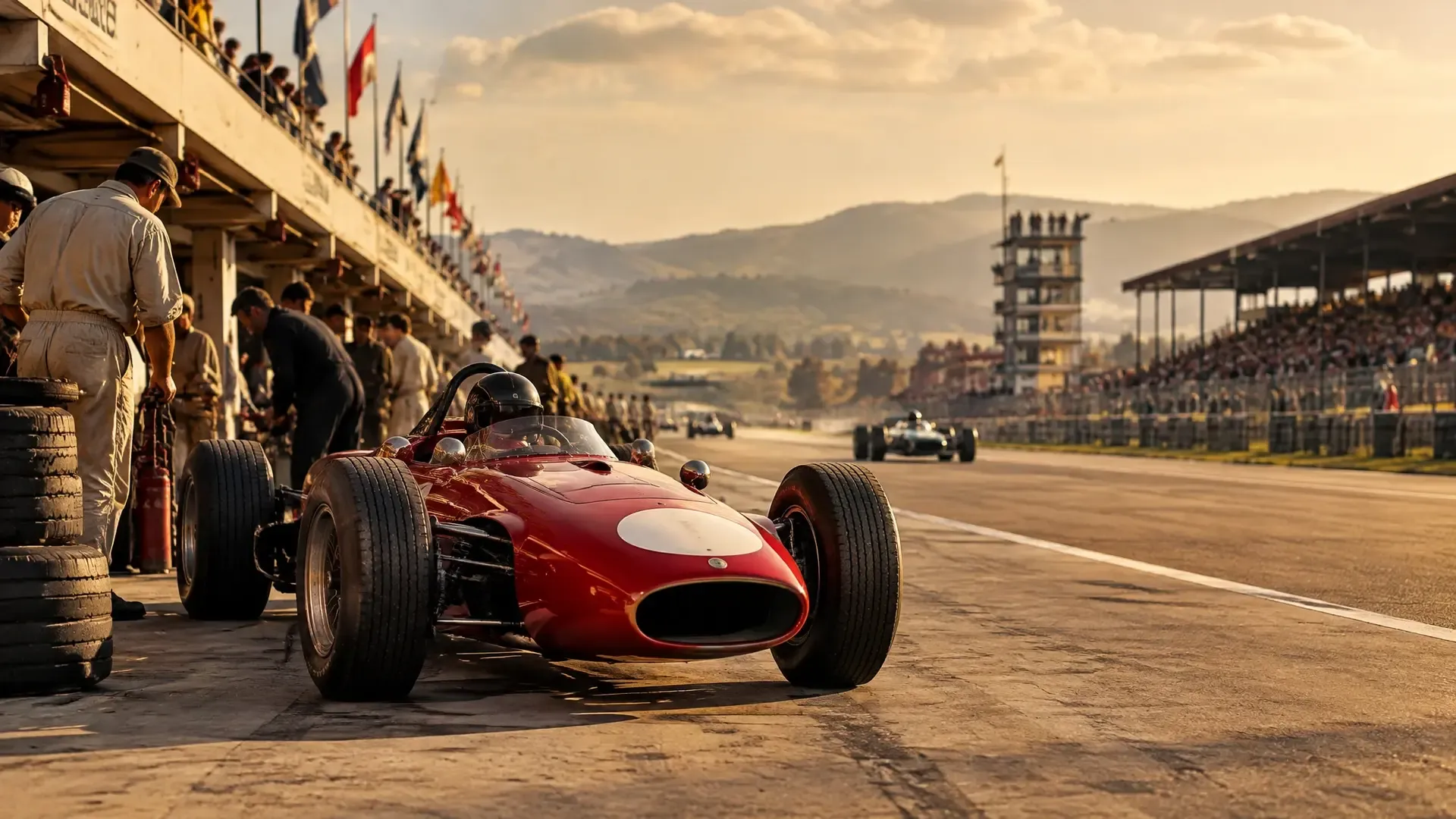
Legendary Formula 1 Teams: The Histories of Ferrari, McLaren, Williams, Lotus, Red Bull and Mercedes
Formula 1 history is shaped not only by great drivers, but also by the constructors that design the cars, build the organisations and create the rivalries that define each era. Some teams have survived for decades; others reached the summit through a concentrated period of brilliance before changing ownership or leaving the championship. Ferrari, McLaren, Williams, Lotus, Red Bull and Mercedes represent six different versions of success.
Their stories also provide a useful way into F1 constructors history. Ferrari’s identity is inseparable from the championship itself, while Lotus changed what a racing car could be. Williams became a model of independent engineering, McLaren developed into a modern racing organisation, and Red Bull and Mercedes demonstrated how quickly a well-funded project could reshape the competitive order. Together, they show why teams matter as much as individual champions.
Ferrari: Formula 1’s enduring standard-bearer
Enzo Ferrari established Scuderia Ferrari in 1929, initially as a racing organisation for Alfa Romeo cars. Ferrari began constructing its own cars after the Second World War, and the marque entered the first Formula 1 World Championship season in 1950. It is the only team to have competed in every championship season, giving Ferrari an exceptional continuity and cultural importance.
Early success came quickly. José Froilán González gave Ferrari its first Formula 1 win at the 1951 British Grand Prix, and Alberto Ascari won the drivers’ title for Ferrari in 1952 and 1953. The team then became a regular force through changing technical eras, collecting constructors’ championships in the 1960s and 1970s while remaining closely associated with Italian motorsport and its distinctive red cars.
Ferrari’s most sustained period of dominance arrived around the turn of the millennium. Michael Schumacher won five consecutive drivers’ championships with the team from 2000 to 2004, while Ferrari secured six consecutive constructors’ titles from 1999 to 2004. Those results were built on the technical leadership of figures including Jean Todt, Ross Brawn and Rory Byrne, as well as an unusually deep relationship between the racing team and its road-car identity.
Ferrari’s significance does not depend only on its title count. Its longevity, passionate international following and ability to remain a central character in every generation of Formula 1 make it the sport’s most recognisable constructor. Even when results have fluctuated, Ferrari has remained a reference point against which other teams are measured.
McLaren: from Bruce McLaren’s workshop to a global organisation
New Zealander Bruce McLaren founded Bruce McLaren Motor Racing in 1963. The team made its Formula 1 debut in 1966 and achieved its first Grand Prix victory at Spa in 1968, when McLaren himself drove the winning car. The organisation’s early development reflected a broader ambition than simply entering races: it built expertise across Formula 1, Can-Am and other forms of motorsport.
McLaren became a championship-winning team in 1974, when Emerson Fittipaldi won the drivers’ title. A major transformation followed under team principal Ron Dennis, who helped create a highly structured and technically ambitious operation. McLaren’s partnership with Porsche-built TAG engines produced championship-winning cars in the mid-1980s, and its Honda era became one of Formula 1’s defining success stories.
Between 1988 and 1991, McLaren won the constructors’ championship four times. The 1988 season was particularly striking: Ayrton Senna and Alain Prost won all but one of the season’s Grands Prix in the dominant McLaren-Honda MP4/4. Their rivalry, and the tension between two exceptional drivers in the same team, became one of the sport’s enduring stories.
McLaren remained competitive through the 1990s and won the 1998 constructors’ title with Mercedes power. Its later history included difficult technical periods and organisational changes, but the team rebuilt its competitiveness in the early 2020s and won the 2024 constructors’ championship. McLaren’s legacy lies in its ability to combine engineering, design, commercial professionalism and driver development into a coherent modern racing organisation.
Williams: independent engineering at the front
Frank Williams founded the organisation that became Williams Grand Prix Engineering in 1977 with Patrick Head. The team scored its first Grand Prix victory in 1979 and won its first constructors’ championship in 1980. Its rise was especially notable because Williams was an independent entrant competing against larger manufacturers and established works teams.
Technical clarity was central to the team’s identity. Patrick Head led the engineering side, while figures such as Adrian Newey later contributed to cars that combined aerodynamic efficiency with strong performance. Williams won constructors’ championships in 1980 and 1981, then enjoyed another remarkable run from 1986 to 1987 and from 1992 to 1994. Drivers including Alan Jones, Keke Rosberg, Nigel Mansell, Alain Prost and Damon Hill all won titles in Williams cars.
The team’s success was tied to several technical partnerships, including its highly competitive Renault period in the 1990s. Active suspension and advanced electronic systems helped produce some of the era’s fastest cars, although such technologies were later restricted or banned. Williams won its ninth and most recent constructors’ championship in 1997.
After that peak, the team struggled to match the resources and technical momentum of manufacturer-backed rivals. Its later competitive decline illustrates how quickly the Formula 1 landscape can change. Williams remains historically important not simply because of its nine constructors’ titles, but because it proved that a focused, independent engineering team could dominate the championship.
Lotus: technical imagination and racing philosophy
Colin Chapman founded Team Lotus in 1958, and the team entered Formula 1 in 1958 before winning its first Grand Prix at Monaco in 1961. Lotus became one of the sport’s most influential constructors through a willingness to challenge conventional thinking about weight, aerodynamics and chassis design.
The Lotus 25 introduced a monocoque chassis to Formula 1 in 1962, replacing the more traditional spaceframe approach. Jim Clark then won the 1963 and 1965 drivers’ championships with Lotus, while the team secured its first constructors’ titles in those same years. Lotus also pioneered the use of aerodynamic wings and later played an important role in the development of ground-effect aerodynamics.
Lotus continued to win with drivers such as Graham Hill, Jochen Rindt, Emerson Fittipaldi and Mario Andretti. Its constructors’ championships came in 1963, 1965, 1968, 1970, 1972, 1973 and 1978. The 1978 Lotus 79 demonstrated the potential of ground effect and became a landmark in Formula 1 design.
The original Team Lotus declined after Chapman’s death in 1982 and eventually left Formula 1. Later Lotus-branded entries appeared in the championship, including teams associated with different ownership and legal arrangements, but those projects should not be treated as a simple uninterrupted continuation of Chapman’s historic constructor. Lotus’s lasting legacy is its intellectual influence: many later advances in Formula 1 followed principles that the team helped establish.
Red Bull Racing: a new force in the modern era
Red Bull Racing entered Formula 1 in 2005 after the acquisition of the Jaguar team. Its early seasons were spent building credibility, with David Coulthard scoring the team’s first podium in 2006 and Sebastian Vettel taking its first victory at the 2009 Italian Grand Prix.
Under team principal Christian Horner and technical director Adrian Newey, Red Bull quickly became the leading team of the early 2010s. Vettel won four consecutive drivers’ championships from 2010 to 2013, and Red Bull won the constructors’ championship in each of those seasons. The team’s cars were especially effective in the era of sophisticated aerodynamics, while its driver programme helped bring young talent into the senior team.
Red Bull returned to the front with Max Verstappen, winning the 2021 drivers’ championship and then combining that success with constructors’ titles from 2022 to 2024. The organisation’s identity has been different from the traditional manufacturer model: it presents itself as an energetic, modern sports brand while relying on advanced technical capability and a clear competitive structure.
Red Bull’s history shows that a relatively new entrant can become a legendary team within a single generation. Its rise also changed the balance of power between historic constructors and ambitious organisations built around investment, recruitment and technical leadership.
Mercedes: two works-team eras, one powerful legacy
Mercedes has two distinct chapters in Formula 1. The first came in 1954 and 1955, when Mercedes-Benz returned to Grand Prix racing with the W196. Juan Manuel Fangio won the drivers’ championship for Mercedes in 1954 and 1955, before the manufacturer withdrew from motorsport after the 1955 season.
The modern Mercedes works team has a different organisational history. Mercedes-Benz returned as a full works constructor in 2010 after acquiring the Brawn GP operation, which itself had evolved from Honda’s former team. The early seasons were a period of development, but the arrival of Lewis Hamilton in 2013 helped set the stage for a remarkable run.
Mercedes dominated the first turbo-hybrid power-unit era, winning eight consecutive constructors’ championships from 2014 to 2021. Hamilton won six drivers’ titles with Mercedes during that period, while Nico Rosberg won the 2016 championship. The team’s success rested on a powerful combination of engine efficiency, aerodynamic development, operational discipline and high-level competition between teammates.
Mercedes’ modern story is therefore separate from the brief 1950s works-team chapter, even though both belong to the same manufacturer’s Formula 1 heritage. Its legacy is defined by engineering excellence and a form of sustained organisational dominance that reshaped the championship for much of the 2010s.
Why these six teams remain legendary
These constructors represent different kinds of greatness. Ferrari stands for continuity and cultural identity; Lotus for technical imagination; Williams for independent engineering; McLaren for organisational evolution; Red Bull for modern expansion; and Mercedes for manufacturer-backed precision. Their championship records matter, but they are only part of the explanation.
They also produced the settings for some of the sport’s most influential drivers and Formula 1 legends. Their contrasting philosophies created the conditions for defining Formula 1 rivalries, from internal teammate battles to long struggles between rival technical concepts. For readers looking beyond individual teams, a broader Formula 1 history overview helps place those changes in the context of the championship’s development.
That combination of longevity, innovation, championships and personality is what makes these six teams legendary. Some built their reputation over half a century, while others transformed the sport in a much shorter time. Together, they demonstrate that Formula 1 history is not merely a record of winners: it is the story of ideas, institutions and identities competing to define what a racing team can become.